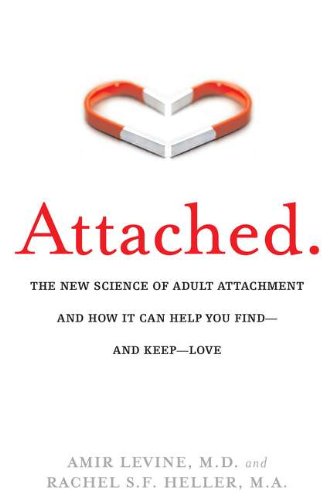
a book
Attached: The New Science of Adult Attachment and How It Can Help YouFind?and Keep?Love
Amir Levine and Rachel S.F. Heller · 2010 · 294 pages
In this groundbreaking book, psychiatrist and neuroscientist Amir Levine and psychologist Rachel S. F. Heller reveal how an understanding of attachment theory-the most advanced relationship science in existence today-can help us find and sustain love. Attachment theory forms the basis for many bestselling books on the parent/child relationship, but there has yet to be an accessible guide to what this fascinating science has to tell us about adult romantic relationships-until now.
Attachment theory owes its inception to British psychologist and psychoanalyst John Bowlby, who in the 1950s examined the tremendous impact that our early relationships with our parents or caregivers has on the people we become. Also central to attachment theory is the discovery that our need to be in a close relationship with one or more individuals is embedded in our genes.
In Attached, Levine and Heller trace how these evolutionary influences continue to shape who we are in our relationships today. According to attachment theory, every person behaves in relationships in one of three distinct ways:
*ANXIOUS people are often preoccupied with their relationships and tend to worry about their partner's ability to love them back.
*AVOIDANT people equate intimacy with a loss of independence and constantly try to minimize closeness.
*SECURE people feel comfortable with intimacy and are usually warm and loving.
Attached guides readers in determining what attachment style they and their mate (or potential mates) follow. It also offers readers a wealth of advice on how to navigate their relationships more wisely given their attachment style and that of their partner. An insightful look at the science behind love, Attached offers readers a road map for building stronger, more fulfilling connections.


recommended by 4 people
sourced from public statements
Mayim Bialik
“Without going into too much detail, I read this book after a bad breakup. Written by a neuroscientist and a psychologist, it shifted my understanding of my own needs as well as of the pitfalls of seeking love and validation from others. It is a powerful book for lay people who are looking for an evidence-based explanation for why they might be making the wrong choices in love — and advice on how to get it right.”↗

