
a book
How to Change Your Mind: What the New Science of Psychedelics Teaches Us About Consciousness, Dying, Addiction, Depression, and Transcendence
Michael Pollan · 2018 · 464 pages
A #1 New York Times Bestseller, New York Times Book Review 10 Best Books of 2018, and New York Times Notable Book
A brilliant and brave investigation into the medical and scientific revolution taking place around psychedelic drugs--and the spellbinding story of his own life-changing psychedelic experiences
When Michael Pollan set out to research how LSD and psilocybin (the active ingredient in magic mushrooms) are being used to provide relief to people suffering from difficult-to-treat conditions such as depression, addiction and anxiety, he did not intend to write what is undoubtedly his most personal book. But upon discovering how these remarkable substances are improving the lives not only of the mentally ill but also of healthy people coming to grips with the challenges of everyday life, he decided to explore the landscape of the mind in the first person as well as the third. Thus began a singular adventure into various altered states of consciousness, along with a dive deep into both the latest brain science and the thriving underground community of psychedelic therapists. Pollan sifts the historical record to separate the truth about these mysterious drugs from the myths that have surrounded them since the 1960s, when a handful of psychedelic evangelists inadvertently catalyzed a powerful backlash against what was then a promising field of research.
A unique and elegant blend of science, memoir, travel writing, history, and medicine, How to Change Your Mind is a triumph of participatory journalism. By turns dazzling and edifying, it is the gripping account of a journey to an exciting and unexpected new frontier in our understanding of the mind, the self, and our place in the world. The true subject of Pollan's "mental travelogue" is not just psychedelic drugs but also the eternal puzzle of human consciousness and how, in a world that offers us both suffering and joy, we can do our best to be fully present and find meaning in our lives.


recommended by 25 people
sourced from public statements

Tim Ferriss
“One of my favorite books of the last five years.”↗

Peter Attia
“Excellent.”↗

Aubrey Marcus
“Has done a better job than any I’ve read so far on this subject at rationally, calmly, and scientifically exploring just how impactful psychedelics can be for the individual and our culture.”↗

David Frum
“Meantime, greatly learning from Mark Thompson's book on the Italian front in WW1”↗

Kara Swisher
“A terrific doc version of his wonderful book. More kudos for @michaelpollan much deserved.”↗

Yuval Noah Harari
“Changed my mind, or at least some of the ideas held in my mind.”↗

Olivia Wilde
“I love what he did for the food revolution, but he’s also just an incredible investigative thinker, It’s an interesting discussion on how we view mental health and hallucinogenic drugs and the kind of ancient connection between those two things.”↗

Stewart Butterfield
“Two recent ⭐️⭐️⭐️⭐️⭐️ books from the last couple of weeks: 'How to Change Your Mind' by Michael Pollan (audiobook with him narrating was great) and 'The Courage to Be Disliked' by Ichiro Kishimi and Fumitake Koga (also listened vs read; recommended).”↗

B.J. Novak
“Three wonderful books I recommend that pertain to drug reform and depression – two issues in our minds this week – and some important connections between them: • Lost Connections by Johann Hari • Chasing the Scream by Johann Hari • How to Change Your Mind by Michael Pollan”↗

Amelia Boone
“@SanityOnTheRun @tferriss yup! Fantastic book.”↗

Nick Offerman
“@herdyshepherd1 @michaelpollan Word up, Mr. Shepherd All of his books are excellent, and his latest (How To Change Your Mind) is another trailblazer 🍄”↗

David Chang
“One of my favorite books is by Michael Pollan. Everyone thinks about Omnivore’s Dilemma, but what makes How to Change Your Mind so amazing is I would literally say Michael Pollan is one of the last people I’d expect to be tripping balls and then writing the most insane book about all of the positive and medical benefits of psychedelics and the history behind them. I mean I love that almost more than the contents of the book, which are amazing in itself. But it’s worth buying if you want to read his descriptions of hallucinogenic experiences because those are never captured well in film, but Pollen’s real straight-laced sort of Hunter S. Thompson’s style really does it justice.”↗
Sebastiaan de With
“@superbryntendo First off: hope she feels better soon, and you stay healthy! I loved How To Change Your Mind by Pollan (and This Is Your Mind On Plants), also check out Matthew McConaughey’s book Greenlights. The audiobook that he reads is great.”↗






books like How to Change Your Mind: What the New Science of Psychedelics Teaches Us About Consciousness, Dying, Addiction, Depression, and Transcendence
other books recommended by the same people who recommend this one

Man's Search for Meaning
Viktor E. Frankl
4 shared recommenders

Thinking, Fast and Slow
Daniel Kahneman
4 shared recommenders

Why We Sleep: Unlocking the Power of Sleep and Dreams
Matthew Walker
4 shared recommenders

The Order of Time
Carlo Rovelli
3 shared recommenders

Bad Blood: Secrets and Lies in a Silicon Valley Startup
John Carreyrou
3 shared recommenders

Behave: The Biology of Humans at Our Best and Worst
Robert M. Sapolsky
3 shared recommenders

Energy and Civilization: a History
Vaclav Smil
3 shared recommenders
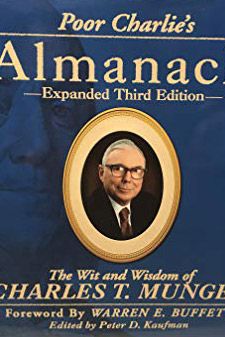
Poor Charlie's Almanack: The Wit and Wisdom of Charles T. Munger, Expanded Third Edition
edited by Peter Kaufman
3 shared recommenders

Principles: Life and Work
Ray Dalio
3 shared recommenders

Sapiens: A Brief History of Humankind
Yuval Noah Harari
3 shared recommenders

The Gene: An Intimate History
Siddhartha Mukherjee
3 shared recommenders

Infinite Jest
David Foster Wallace
2 shared recommenders