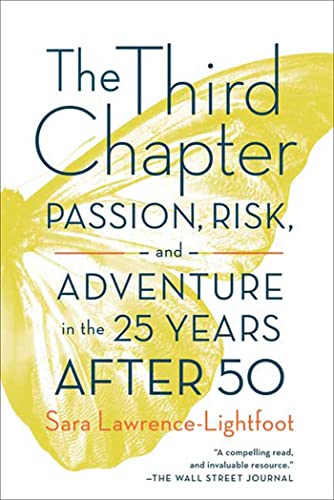
a book
The Third Chapter
Sara Lawrence-Lightfoot · 2009 · 304 pages
"We must develop a compelling vision of later life: one that does not assume a trajectory of decline after fifty, but one that recognizes it as a time of change, grown, and new learning; a time when ‘our courage gives us hope.'" —from The Third Chapter
At a key moment in the twenty-first century, demographers are recognizing the significance of a distinct developmental phase: those years following early adulthood and middle age when we are "neither young nor old." Whether by choice or not, many in their "third chapters" are finding ways to adapt, explore, and channel their energies, skills, and passions in new ways and into new areas.
It's this process of creative reinvention that the renowned sociologist Sara Lawrence-Lightfoot details in The Third Chapter, which redefines our views about the casualties and opportunities of aging. She challenges the still-prevailing and anachronistic images of aging by documenting and revealing how the years between fifty and seventy-five may, in fact, be the most transformative and generative time in our lives, tracing the ways in which wisdom, experience, and new learning inspire individual growth and cultural transformation.
The Third Chapter is not a how-to guide but a fascinating work of sociology, full of passionate and poignant stories of risk and vulnerability, failure and resilience, challenge and mastery, experimentation and improvisation, and insight and new learning. These stories reveal a whole world of learning and discovery awaiting those who want it. In The Third Chapter, Lawrence-Lightfoot captures a new moment in history and offers us a book rich with insight and hope about our endless capacity for change and growth.


recommended by 1 person
sourced from public statements

Chip Conley
“I love the humanity of Sara Lawrence-Lightfoot. While this book is nearly 12 years old, it captures some of the vulnerability & bewilderment that people over 50 felt during the Great Recession that might be even further amplified by these pandemic times.”↗